

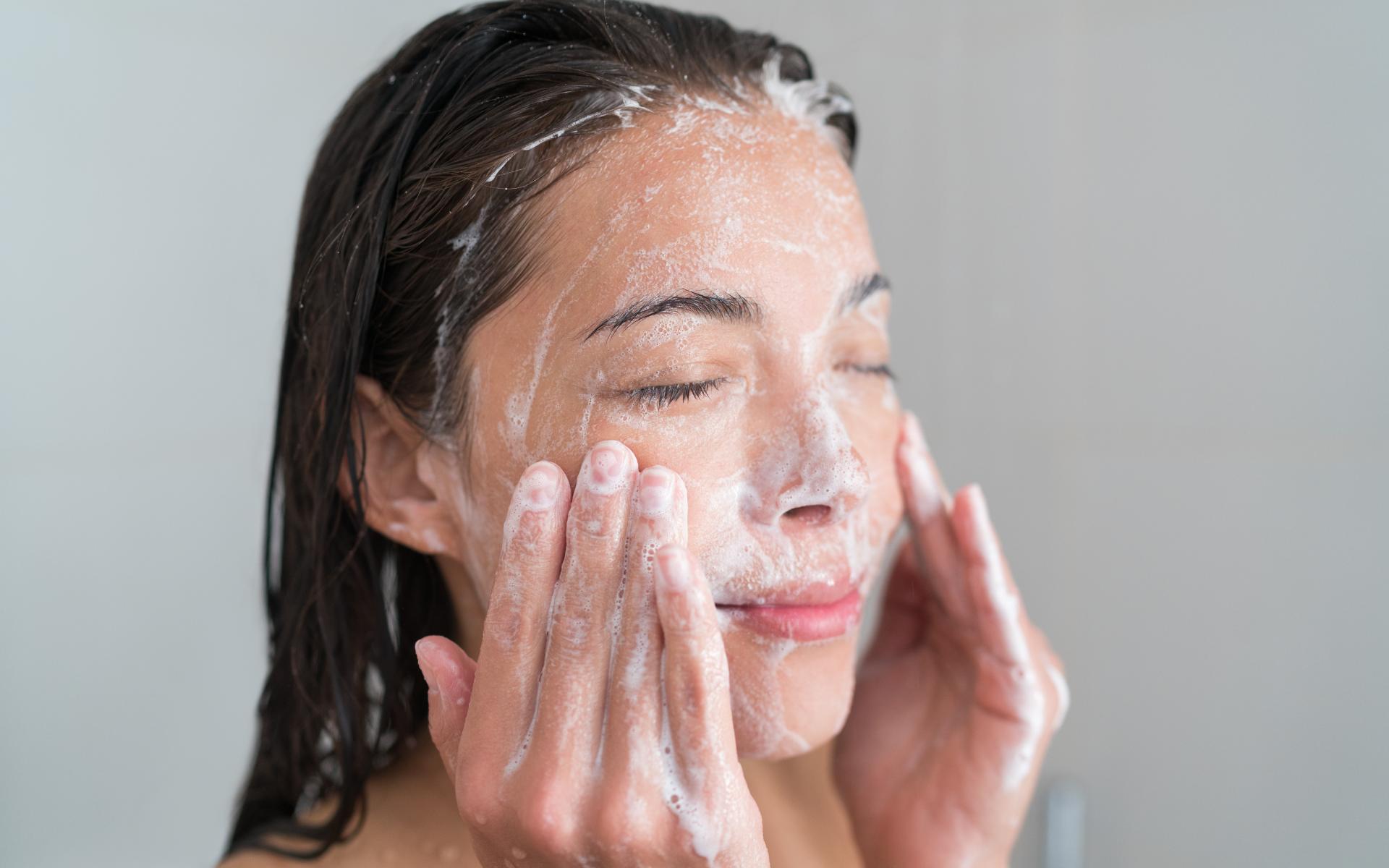
Most people believe acne starts on the surface of the skin, but in reality, pimples begin deep inside the pore. Excess oil, dead skin cells, and impurities accumulate within the follicle, creating a blockage. This trapped environment becomes the perfect breeding ground for blackheads, whiteheads, and inflammatory acne. If a facewash cannot reach and treat this blockage, acne continues to return no matter how often the skin is cleansed.
An effective acne facewash is not meant to just remove dirt, sweat, or makeup. Its primary role is to clean inside the pore, regulate oil flow, prevent dead skin cells from sticking together, and maintain a healthy skin barrier. Unfortunately, most acne facewashes focus only on surface-level cleansing, giving a temporary feeling of freshness without solving the actual problem.
Many facewashes rely on strong foaming agents that strip oil from the top layer of the skin. This creates an instant “clean” sensation, but the blockage inside the pore remains untouched. Over time, this harsh cleansing damages the skin barrier, causing increased oil production as the skin tries to protect itself. The result is a cycle of dryness, excess oil, and recurring acne.
There is a common belief that more foam means better cleansing. In reality, foam has very little to do with deep pore cleaning. High-foam facewashes often depend on sulfates or aggressive surfactants that remove surface oil quickly but fail to penetrate clogged pores. This leads to short-term clarity followed by long-term breakouts.
Salicylic acid is widely known as the gold standard ingredient for acne-prone skin. It is oil-soluble, which means it has the ability to enter oily pores and break down blockages. However, not all salicylic acid facewashes work the same way. The problem lies in how salicylic acid is formulated and delivered into the skin.
In many over-the-counter facewashes, salicylic acid sits on the surface of the skin for only a few seconds before being washed away. This short contact time is not enough for it to penetrate deeply into clogged pores. In some cases, high concentrations are used to compensate, leading to irritation, dryness, and barrier damage without effectively clearing acne.
Harsh acne facewashes aim to “dry out” pimples instead of treating the cause. While this may temporarily reduce inflammation, it weakens the skin barrier. A compromised barrier allows bacteria, pollution, and irritants to enter more easily, increasing sensitivity and worsening acne over time.
Blocked pores form when dead skin cells become sticky and fail to shed naturally. Oil produced by the sebaceous glands gets trapped along with these cells. Over time, this mixture hardens inside the pore. Unless a facewash can gently dissolve these bonds and regulate oil flow, the blockage will persist beneath the surface.
True deep pore cleansing does not mean aggressive scrubbing or over-washing. It requires ingredients that work slowly and intelligently inside the pore. This process should break down dead skin cell bonds, loosen trapped oil, and allow the pore to clear naturally without causing inflammation.
One of the biggest advancements in acne care is encapsulated salicylic acid. Instead of releasing all at once, encapsulated technology allows salicylic acid to penetrate gradually into the pore. This slow-release mechanism increases effectiveness while reducing irritation, making it far superior to traditional formulations.
Acne is not caused by a single factor, so relying on one ingredient alone is rarely effective. A multi-acid system combines different acids that work at different levels of the skin. While salicylic acid clears inside the pore, other acids support surface renewal and inflammation control, creating a more balanced and sustainable acne solution.
Azelaic acid plays a crucial role in reducing inflammation, calming redness, and improving acne marks. It also helps control acne-causing bacteria without disrupting the skin’s natural balance. When combined with salicylic acid, it enhances results while minimizing irritation.
Mandelic acid is a larger molecule compared to other exfoliating acids, which allows it to work gently on the skin surface. It helps smooth texture, improve cell turnover, and prevent pore congestion without triggering sensitivity. This makes it ideal for acne-prone and sensitive skin types.
One of the biggest mistakes in acne treatment is ignoring the skin barrier. A healthy barrier regulates moisture, protects against bacteria, and maintains skin balance. Facewashes that include soothing and hydrating ingredients help ensure that acne treatment does not come at the cost of long-term skin health.
CICA and advanced hydrators support skin recovery while active ingredients do their job. They reduce irritation, improve tolerance, and allow acne treatments to be used consistently. Consistency is key when it comes to clearing blocked pores and preventing new breakouts.
If acne continues to return, it usually means the pore was never fully cleared. Surface cleansing, temporary oil control, or harsh drying may reduce symptoms, but the root cause remains inside the pore. Without deep, intelligent cleansing, acne becomes a recurring issue rather than a solved one.
Effective acne facewashes work gradually. Instead of instant brightness or tightness, they show visible improvements over repeated use. As pores begin to clear from within and inflammation reduces, skin texture and clarity improve naturally. This is the difference between cosmetic cleansing and corrective care.
Professional-grade acne facewashes are designed with performance and skin safety in mind. They use advanced delivery systems, balanced acid combinations, and barrier-supporting ingredients. Unlike mass-market products, they aim for long-term results rather than quick cosmetic effects.
Strong acne care does not mean burning, tingling, or excessive dryness. True strength lies in intelligent formulations that work deeply while respecting the skin. When acne care is too aggressive, it creates more problems than it solves.
The right acne facewash should target oil, dead skin cells, inflammation, and barrier health at the same time. It should clean inside the pore, not just on the surface. This balanced approach is what leads to clearer skin and fewer breakouts over time.
Modern acne care is shifting away from harsh treatments toward smarter, science-backed solutions. Multi-acid systems, encapsulated actives, and barrier-safe formulations are becoming the new standard. This evolution reflects a deeper understanding of how acne actually forms and how it should be treated.
Most acne facewashes fail because they address symptoms instead of causes. Clearing blocked pores requires more than foam and quick fixes. It demands intelligent ingredients, proper delivery systems, and respect for the skin barrier. When acne care works from inside the pore, results last longer, skin stays healthier, and breakouts finally come under control.